
Godzilla Melee Remastered Multiplayer and Co-op Guide
Local split-screen, four-player sessions, and the new online mode explained. What is confirmed, what is still unclear, and how to set up a match.
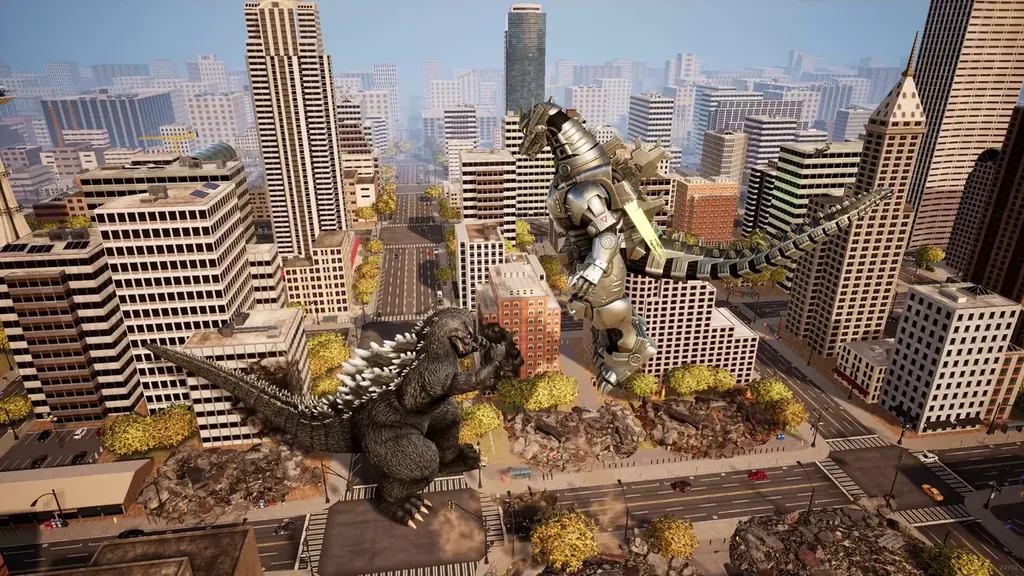
The remaster has two multiplayer halves. The first is local: split-screen play, with the Steam version tagged for four-player local sessions. The second is online: a new mode that Atari describes as online multiplayer with matchmaking. The two halves do not share a crossplay pool as far as anyone knows, because Atari has not announced crossplay.
The official wording is "local co-op or new online multiplayer." That phrase is broad, and it leaves some details unclear. This guide separates what is confirmed from what you should test yourself on launch day.
What is confirmed
- Local split-screen play. The game supports shared/split-screen PvP, according to Steam's feature list.
- Four-player local play. Steam tags the game "4 Player Local." That is a store tag, not a detailed mode description, but it is the strongest public indication of the local player count.
- Online multiplayer. Atari's announcement describes a new online multiplayer mode with matchmaking.
- Online PvP. Steam lists Online PvP as a feature.
- No crossplay confirmation. Neither Atari nor Steam lists cross-platform multiplayer.
- No campaign co-op confirmation. "Local co-op" may refer to team battles or shared local sessions, not a two-player story campaign. Do not assume the campaigns are co-op until you see it in the mode menu.
The official line says local co-op, while Steam lists shared/split-screen PvP. Both can be true: the game may let two players fight each other locally and also let them team up against CPU opponents. The mode menu is the authority. This page will be updated if Atari clarifies.
Local multiplayer setup
Local play is the simplest way to enjoy the remaster. You need one console or PC, one copy of the game, and enough controllers.
PS5. Connect a second DualSense (or a compatible controller) and sign it in as a guest. The game supports split-screen, so both players share the screen. A PlayStation Plus subscription is not required for local play.
Xbox Series X|S. Connect a second Xbox controller and sign it in. Local split-screen does not require Game Pass Core. The Series S has two USB ports, so a wired second controller is easy; wireless controllers pair the same way as the primary.
Switch 2. Use the Joy-Con 2 pair or a Pro Controller for the second player. In tabletop mode, the kickstand and the smaller screen make four-player sessions cramped. A TV is the better setup. Local wireless play is supported, but the game does not list a LAN mode.
PC. Connect a second controller through USB or Bluetooth. Steam Input handles most modern controllers. The game supports Remote Play Together, which lets a friend join a local session over the internet; the guest streams the host's screen, so input latency depends on the connection.
For four players, you need four controllers. The game does not support four players on one keyboard. If you are on PC and short on controllers, Remote Play Together can fill a slot, but it is not a substitute for a local controller.
Online multiplayer
The online mode is the biggest addition to the remaster. The 2002 game had no online play, so this is new territory for the series. Atari has described matchmaking, but the publisher has not published a detailed ranked structure, lobby size, or season plan.
What you can expect based on the store features and the announcement:
- One-on-one online versus, likely with a casual and/or ranked queue.
- Matchmaking that pairs you with players of similar skill, at least at launch.
- Online PvP as the primary mode; cooperative online play has not been confirmed.
- Platform-specific online subscriptions: PlayStation Plus on PS5, Game Pass Core or Ultimate on Xbox, Nintendo Switch Online on Switch 2. PC Steam does not require a separate subscription.
What is not confirmed:
- Crossplay between platforms.
- Cross-save or cross-progression.
- A lobby system with friends.
- Dedicated servers versus peer-to-peer.
- Ranked seasons or cosmetic rewards.
Do not buy a second copy for another platform expecting to play with a friend until crossplay is confirmed. The safe assumption is that each platform has its own pool.
How to set up a local match
The exact menu labels vary by platform, but the flow is consistent:
- From the main menu, choose the multiplayer or versus option.
- Select local play.
- Choose the number of players.
- Pick a stage. The remaster has eight locations with day and night variants.
- Pick a monster. If some monsters are locked, the game will show the unlock requirement.
- Set the match rules: stock, time, or the game's default.
- Start the match.
If the game asks you to sign in a second profile, do it before selecting the stage. Some consoles handle guest profiles differently, and a missing profile can block the second player from joining.
The eight locations have day and night versions, and the lighting changes how well you can track projectiles. If a stage feels too dark in split-screen, switch to the day variant. The maps guide lists the locations.
Online etiquette and practical tips
Finish your matches. Leaving early may not award currency and can hurt your matchmaking reputation if the game tracks completion. The launch build's penalties are unknown, but finishing is the safer habit.
Do not rely on one combo. Online opponents adapt. If you only know one route, a patient player will block it and punish the recovery. Learn a second approach.
Expect latency. The game's netcode has not been detailed. If you feel delayed inputs, favor faster attacks and avoid precise counter-timing until you adjust.
Use the character you know. A top-tier character you have never played is worse than a mid-tier character you understand. The tier list is a guide, not a command.
Check the mode rules. If Rage Mode is disabled in a mode, your usual game plan changes. Read the lobby settings before you commit.
Four-player local: what changes
Four-player local play is chaos, and that is the point. The camera is tighter, the screen is split, and projectiles come from multiple directions. Characters with wide normals and area attacks become more valuable. Godzilla, King Ghidorah, and Mechagodzilla are forgiving picks; Gigan and Kiryu demand more precision.
If you are hosting, set the rules before the first match. A stock battle with a time limit prevents one player from running away with the game. If you have mixed skill levels, give the newer players the simpler characters and let the experienced players use the specialists.
The Steam "4 Player Local" tag is the best public evidence for the player count. The official announcement only says local co-op. Test the mode on your platform before you invite three friends.
Does multiplayer affect unlocks?
Multiplayer matches award currency, according to the remaster's unlock structure. The exact payout is not published. If you want to unlock the full roster, playing the mode you enjoy is the least painful route. The unlock guide covers the priorities.
Local play may award currency differently from online play. Check the post-match screen to see what you earned. If local play pays less, use it for practice and online for progression, or vice versa depending on your preference.
The bottom line
The remaster's multiplayer is a local party game first and an online fighter second. The local four-player tag is the strongest confirmed feature; the online mode is new and its long-term structure is unknown. If you have friends nearby, the local mode is the reason to buy. If you are buying for online play, wait for crossplay confirmation and launch-week server reports before choosing a platform.
Official source: Steam store page for Godzilla: Destroy All Monsters Melee Remastered
For the next read, compare the tier list and the unlock route.
Sources and verification
- Steam lists Online PvP, Shared/Split Screen PvP, Shared/Split Screen, Remote Play Together, and the 4 Player Local tag.
- The official Godzilla roster article describes online multiplayer alongside local co-op.
- Gematsu confirms the platform lineup and the new online mode.
- Wikipedia's original game article confirms that the 2002 release had no online play.
Crossplay, lobby features, and campaign co-op are the details most likely to change after launch. Check the in-game mode menu and Atari's official channels for the final word.
More Godzilla: Destroy All Monsters Melee Remastered Guides
How to play Destoroyah in the remaster: closing space, turning one opening into huge damage, and managing the commitment that makes him high-risk.
How to play Gigan in the remaster: buzzsaw pressure, chest laser zoning, movement mix-ups, and the defense you need to survive his small health pool.
How to play Godzilla 2000 in the remaster: the faster Godzilla's pressure game, spiral breath punishes, Rage timing, and the matchups where speed fails.
How to play Godzilla in the remaster: the neutral game, atomic breath timing, Rage Mode usage, and the matchups that punish careless beam spam.
How to play King Ghidorah in the remaster: using three heads and gravity beams to control space, when to stomp, and how to survive when a brawler gets inside.
How to play Kiryu in the remaster: the freeze tool, maser zoning, heavyweight normals, and the setup routes that make him the highest-ceiling monster.
How to play Mecha-King Ghidorah in the remaster: using cable traps and gravity beams to control space, and why the setup character is harder than King Ghidorah.
How to play the Showa Mechagodzilla in the remaster: armor trades, missile pressure, beam zoning, and the close-range weakness that keeps him honest.