
Godzilla Melee Remastered Beginner Guide
Start with the right mode, learn blocking and Rage Mode, and avoid the five mistakes that lose most launch-week matches. A practical first-session plan.
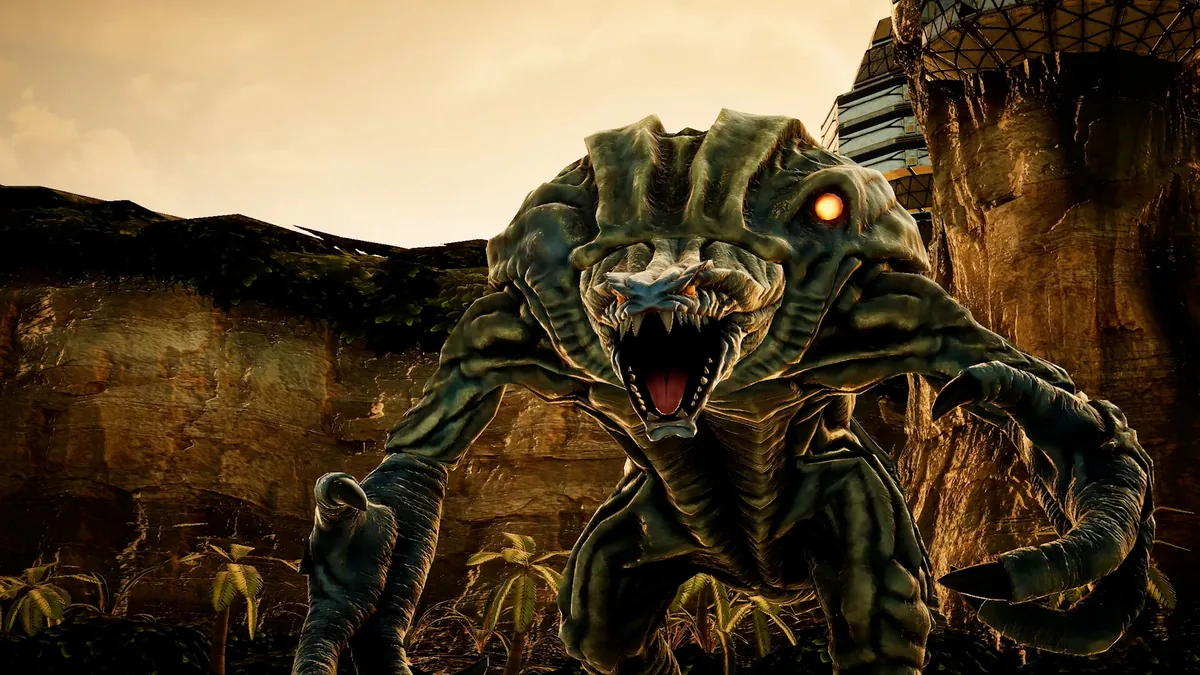
The remaster is not a complicated fighting game, but it is an unusual one. It is a 3D arena fighter with large characters, slow animations, destructible cities, and a Rage Mode that can turn a losing round around. New players tend to lose for the same five reasons: they attack from too far away, they ignore blocking, they waste Rage, they fight the camera, and they pick a character before they understand the neutral game.
This guide is a first-session plan. It assumes you have just installed the game and you want to be competent by the end of the night, not tournament-ready by the end of the week.
Step 1: play the campaign before online
The single-player campaign is the best tutorial in the game. Each kaiju has its own campaign, and the mode introduces the move set against a sequence of opponents. You do not need to finish all 12 campaigns, but you should finish at least one before you queue online.
Pick Godzilla for the first campaign. He is the all-round character: a projectile, a reliable close-range string, and enough weight to survive mistakes. If you insist on a different monster, pick King Ghidorah or Mechagodzilla. All three teach the same fundamentals without demanding precise execution.
The campaign also pays currency toward unlocks. You are not wasting time by playing it. The unlock guide explains how to spend that currency.
The game's move list is available in the pause menu, but the campaign's early fights are designed to make you use the basic tools. If you skip them, you will arrive online without knowing how to block or how to build Rage.
Step 2: learn the three defensive tools
Most new players treat the game as a race to press attack. The better approach is to learn defense first.
Blocking. Holding block reduces damage and prevents some knockback. It is not invincible: throws and some unblockable attacks beat it. The skill is knowing when to block and when to sidestep. If you hold block against a grappler, you will get grabbed.
Sidestepping. The arena is three-dimensional. A sidestep can make a beam whiff or put you beside an opponent who is committed to a forward attack. It is faster than walking around, and it is the main answer to projectile zoning.
Wake-up timing. When you get knocked down, you are vulnerable for a moment. Do not mash attack. Learn the timing of your character's wake-up options, and use them to escape pressure rather than to trade hits.
These three tools matter more than any combo. A player who blocks and sidesteps will beat a player who knows a longer combo but never defends.
Step 3: understand Rage Mode
Rage Mode is the remaster's comeback mechanic. Each monster builds Rage through combat, then activates a temporary state with enhanced damage and access to special tools. The official description says each kaiju has a distinct move set that includes melee, ranged energy blasts, and Rage Mode.
New players make two mistakes with Rage:
- Popping it immediately. Rage is most valuable when the opponent is committed or when you need to steal a round. Activating it at full health with no opening wastes the pressure.
- Saving it forever. Rage does not need to be hoarded. If you are one hit from losing, use it. The meter will build again.
The best time to activate is after you land a knockdown or when the opponent is stuck in a long animation. That gives you free pressure and forces the opponent to guess.
Step 4: pick a range and stay there
Every character has a preferred range:
- Zoners (King Ghidorah, Mechagodzilla) want mid-to-long range.
- Brawlers (Godzilla, Orga) want close range.
- Rushdown (Godzilla 2000, Gigan) want to stay in the opponent's face.
- Grapplers (Megalon) want to be close enough to grab.
- Aerial (Rodan) wants to attack from angles the opponent cannot cover.
The neutral game is the process of getting to your range without walking into the opponent's. If you play a zoner and you spend the match at close range, you are playing the opponent's game. If you play a brawler and you chase a zoner across the map, you are also playing the opponent's game.
Step 5: use the arena
The remaster's arenas are not flat backdrops. Buildings and landmarks can be used as weapons or cover. The official material highlights destructible environments and the ability to use buildings as weapons. That changes the neutral game: a character who can break line of sight can approach a zoner more safely.
Do not ignore the environment. If a building is between you and a projectile character, use it. If a destructible object can be thrown, throw it. The maps guide covers the eight locations and their day/night variants.
In local split-screen, the camera is tighter and more chaotic. In online play, the camera is one-on-one. Learn to keep the opponent on screen and to use the lock-on or camera reset rather than fighting the manual camera.
The five mistakes that lose launch-week matches
1. Attacking from too far away. The game has long animations, but a whiffed attack is still a free punish. If you are not in range, close the distance or use a projectile.
2. Ignoring the block button. New players often hold forward and attack. A patient opponent will block, punish, and repeat. Learn to block first.
3. Wasting Rage. Activating Rage at full health with no opening is a common mistake. Save it for a momentum swing.
4. Choosing a character before learning the system. A technical character like Kiryu will feel weak if you do not understand the neutral game. Start with an all-rounder, then branch out.
5. Playing only one mode. The campaign teaches the move set, local play teaches adaptation, and online teaches matchups. A balanced first session includes all three.
A first-session checklist
- Finish one campaign with Godzilla.
- Win one local match against the CPU on the default difficulty.
- Play three online matches, win or lose.
- Unlock one additional monster.
- Try that monster in a local match.
- Read the move list for your main and identify one anti-air and one wake-up option.
That is enough for day one. You do not need to learn every character or every arena before you play online. The matchmaking will place you against players of similar experience, at least at launch.
What to learn next
Once you can block and sidestep consistently, learn one combo route for your main. The controls page lists the default bindings and the input notation. The tier list explains which characters reward practice. The multiplayer guide covers the online and local modes.
If you want a character-specific plan, start with the Godzilla guide. It covers his neutral tools, Rage usage, and the matchups that give him trouble.
Official source: Steam store page for Godzilla: Destroy All Monsters Melee Remastered
For the next read, compare the tier list and the unlock route.
Sources and verification
- Steam confirms the single-player campaigns, local co-op, online multiplayer, Rage Mode, and destructible environments.
- The official Godzilla roster article describes the melee, ranged, and Rage tools.
- Gematsu confirms the remaster's platforms and core feature set.
- TOHO Kingdom's original specifics provides historical context for the 2002 combat system.
The remaster preserves the original's core mechanics, but the online mode and unlock system are new. Treat this guide as a launch-week starting point, not a final competitive manual.
More Godzilla: Destroy All Monsters Melee Remastered Guides
How to play Kiryu in the remaster: the freeze tool, maser zoning, heavyweight normals, and the setup routes that make him the highest-ceiling monster.
How to play Mecha-King Ghidorah in the remaster: using cable traps and gravity beams to control space, and why the setup character is harder than King Ghidorah.
How to play the Showa Mechagodzilla in the remaster: armor trades, missile pressure, beam zoning, and the close-range weakness that keeps him honest.
How to play Megalon in the remaster: using the drill to close space, punishing blocks with grabs, and turning a corner into a win condition.
How to play Orga in the remaster: using the shoulder cannon to cover his approach, controlling space with grabs, and why he is a safe second pick.
How to play Rodan in the remaster: using flight and speed to avoid grounded fights, the heat beam's role, and the matchups that punish reckless dives.
How the control scheme works on PS5, Xbox, Switch 2, and PC, the inputs that matter in a fight, and the settings worth changing before your first online match.
Local split-screen, four-player sessions, and the new online mode explained. What is confirmed, what is still unclear, and how to set up a match.