
Mecha-King Ghidorah Guide: Cables, Traps, and Zoning
How to play Mecha-King Ghidorah in the remaster: using cable traps and gravity beams to control space, and why the setup character is harder than King Ghidorah.
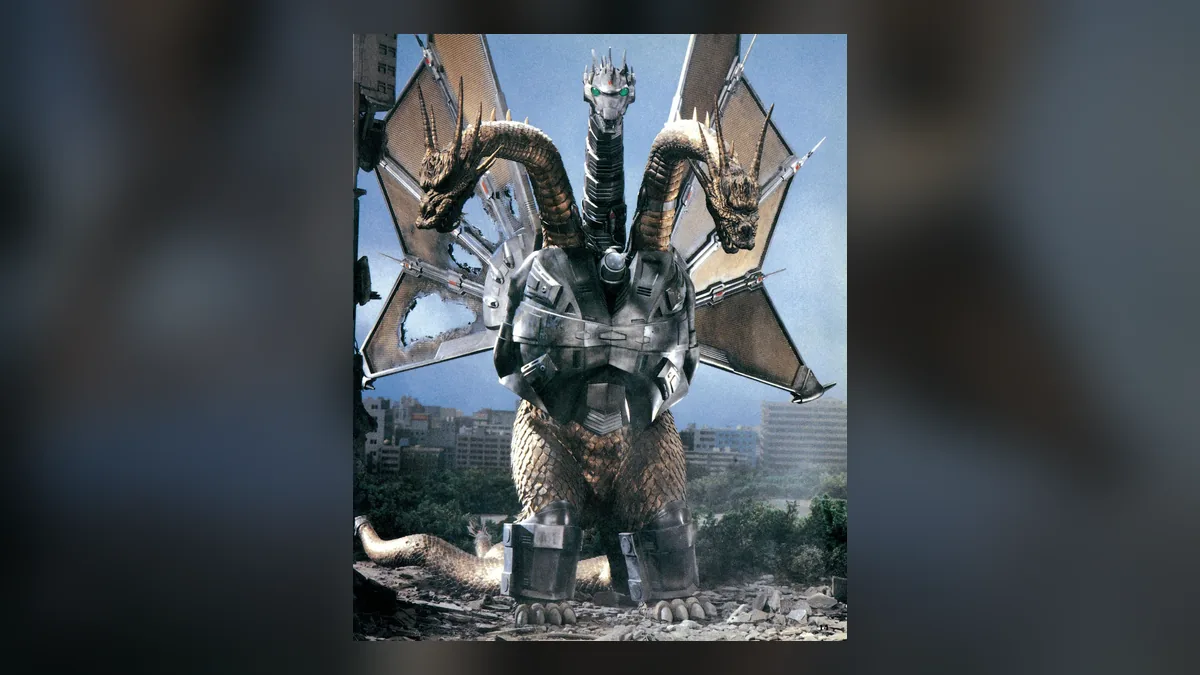
Mecha-King Ghidorah is the technical zoner of the roster. He has the same three-headed silhouette as King Ghidorah, plus cybernetic tools that let him trap and reposition opponents. The payoff is a character who can lock down space better than anyone else. The cost is that his best tools require the opponent to be in the right place at the right time.
He is not a beginner pick. If you play him like King Ghidorah, you will find him slower and less forgiving without understanding why. The character is about setup: a beam or a cable creates a window, and the window creates the next threat.
The toolkit
Gravity beams. His ranged attack covers long distances, like King Ghidorah's. It is the foundation of his zoning. Use it to claim space and to force the opponent to move.
Cables or capture tools. Mecha-King Ghidorah's cybernetic parts give him tools that can grab, stun, or restrict the opponent. The exact behavior may differ from the 2002 version, but the design intent is the same: create a trapped state and punish it.
Wide normals. His size and heads give him broad melee coverage. He can catch opponents who try to circle, but his normals are slower than a brawler's.
Stomps. Slow, high-damage attacks that punish a grounded opponent. Use them after a cable or a beam, not as a raw neutral tool.
Rage Mode. His Rage state enhances his damage and makes his traps more threatening. Activate it when the opponent is at mid-range and respecting your space.
Fire a beam to make the opponent block or sidestep, then use the cable to catch the movement. The beam is the setup; the cable is the payoff.
The neutral game
Mecha-King Ghidorah wants to be at mid-to-long range, where his beams and cables can control the opponent's movement. At close range, he is vulnerable to faster characters and grapplers. The basic loop:
- Fire a beam to claim space.
- If the opponent blocks, use a cable or a stomp.
- If the opponent sidesteps, use a wide normal to cover the angle.
- If the opponent closes, block and look for a grab or a cable.
- Reposition between threats so the opponent cannot predict the pattern.
The character is about building a web. A single beam is easy to avoid; a beam plus a cable plus a wide normal is a trap. The opponent has to choose a route, and you punish the route.
Using Rage Mode
Activate Rage when:
- The opponent is at mid-range and respecting your beams.
- You have just landed a cable or a stomp.
- You need to steal a round and the opponent is low on health.
Do not activate it when the opponent is already inside. The enhanced damage will not help you if you cannot create space. During Rage, use beams and cables to keep the opponent at range, then finish with a stomp.
If you do not enjoy planning two steps ahead, Mecha-King Ghidorah will feel clunky. His tools are not designed for reaction; they are designed for prediction. That is why he is in the specialist tier.
Matchups
Vs. Godzilla. Godzilla wants to close the distance. Use beams to make his approach predictable, and punish his slow recovery with a cable or a stomp. Do not let him stand at mid-range and fire back.
Vs. King Ghidorah. A zoner mirror. The player who claims the center and layers beams better wins. Your cables give you an extra trap, but his speed and reach may be better. Do not trade beams at max range.
Vs. Mechagodzilla. Another zoner matchup. Use your cables to punish his armor, and do not let him establish a projectile pattern. The matchup is about patience.
Vs. Kiryu. Kiryu's freeze tools can stop your setup. Avoid predictable beam patterns, and do not let him close for free. The matchup is about patience.
Vs. Gigan. Gigan is fast and wants to mix you up. Use wide normals and beams to cover his movement. If he gets inside, block and grab.
Vs. Rodan. Rodan attacks from the air. Use beams to cover his landing and wide normals when he circles. Do not chase him.
Vs. Megalon. Megalon's drill and grabs can punish your slow normals. Keep him at range, and do not let him establish the drill range.
Vs. Destoroyah. Destoroyah hits hard and closes space. Block the first approach, then punish the recovery. Your beams can interrupt his advance.
Vs. Orga. Orga is stable at every range. Use beams to claim space and wide normals to cover his approach. The matchup is close to even.
Vs. Anguirus. Anguirus is short and can make your high attacks whiff. Use low beams and stomps, and do not assume your wide normals will connect.
Vs. Godzilla 2000. The faster Godzilla wants to pressure you. Use beams to make his approach predictable, and punish his commitments. Do not let him dictate the pace.
Beginner mistakes
Playing like King Ghidorah. Mecha-King Ghidorah is slower and more setup-dependent. If you only fire beams, you are playing a worse version of his predecessor.
Ignoring the cables. The cables are the reason to pick the character. Use them after a beam or a blocked string.
Using Rage at close range. Activate it when you have space, not when you are trapped.
Panicking when the opponent gets inside. Block, sidestep, and look for a grab. Do not try to out-mash a faster character.
Overcommitting to a trap. If the opponent avoids the cable, do not stand there waiting. Reset and build a new pattern.
A simple game plan
- Round start: claim the center, fire a beam to test the opponent's approach.
- If ahead: keep layering beams and cables, do not get greedy with stomps.
- If behind: use Rage to push the opponent back, then re-establish the zoning.
- In the corner: block, sidestep, and look for a grab. Do not try to jump out.
- Last hit: use a beam or a cable, not a slow stomp.
Mecha-King Ghidorah is a character who rewards players who think about the next two moves. He is not the easiest pick, but he is one of the most satisfying when a trap lands. The tier list places him in the specialist tier for that reason.
Official source: Godzilla: Destroy All Monsters Melee Remastered Trailer Reveals Full 12-Kaiju Roster
For the next read, compare the tier list and the unlock route.
Sources and verification
- The official Godzilla roster article confirms Mecha-King Ghidorah as one of the 12 playable kaiju.
- Steam confirms the Rage Mode and the single-player campaign structure.
- TOHO Kingdom's original specifics provides the 2002 Mecha-King Ghidorah context.
- Wikizilla tracks the remaster's roster.
The exact frame data and move inputs may differ from the 2002 release. Check the in-game move list for the final values.
More Godzilla: Destroy All Monsters Melee Remastered Guides
How to play Kiryu in the remaster: the freeze tool, maser zoning, heavyweight normals, and the setup routes that make him the highest-ceiling monster.
How to play the Showa Mechagodzilla in the remaster: armor trades, missile pressure, beam zoning, and the close-range weakness that keeps him honest.
How to play Megalon in the remaster: using the drill to close space, punishing blocks with grabs, and turning a corner into a win condition.
How to play Orga in the remaster: using the shoulder cannon to cover his approach, controlling space with grabs, and why he is a safe second pick.
Start with the right mode, learn blocking and Rage Mode, and avoid the five mistakes that lose most launch-week matches. A practical first-session plan.
How to play Rodan in the remaster: using flight and speed to avoid grounded fights, the heat beam's role, and the matchups that punish reckless dives.
How the control scheme works on PS5, Xbox, Switch 2, and PC, the inputs that matter in a fight, and the settings worth changing before your first online match.
Local split-screen, four-player sessions, and the new online mode explained. What is confirmed, what is still unclear, and how to set up a match.